EBCRC Hosts Citywide HCRP Seminar to Boost Eye Donation in Mumbai
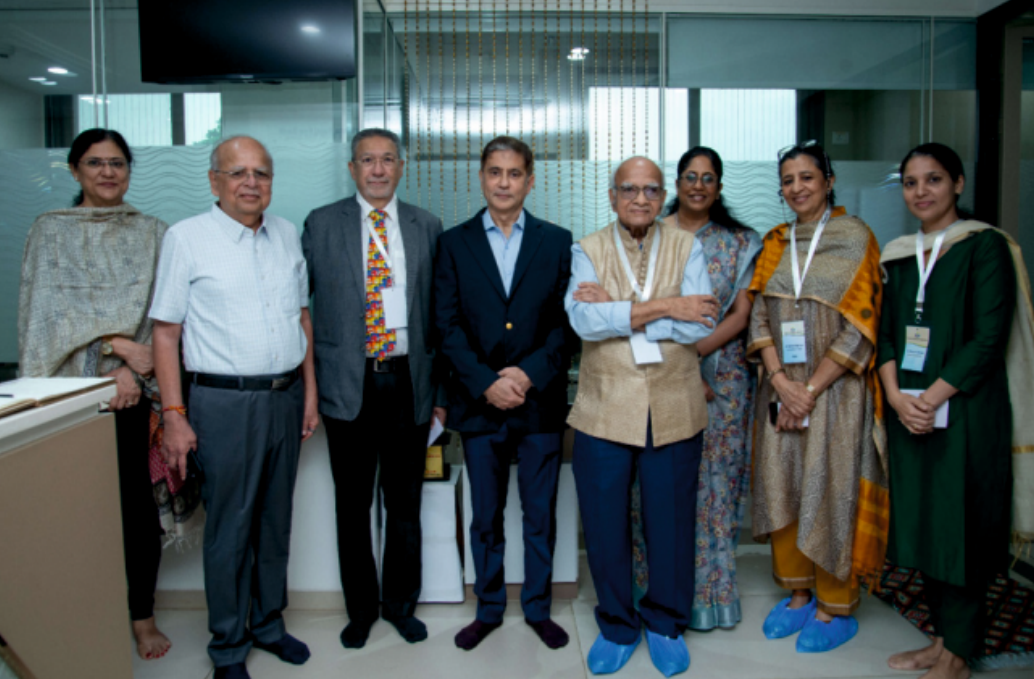
The Eye Bank Coordination & Research Centre (EBCRC), Wadala, organised the Hospital Cornea Retrieval Programme (HCRP) Seminar on 2nd November 2025 at its premises in Shantilal Shanghvi Eye Institute, Mumbai. The main objective of the seminar was to strengthen eye donation and cornea retrieval practices across Mumbai’s Municipal hospitals. The event brought together senior ofcials of the Municipal
Corporation of Greater Mumbai (MCGM), leading ophthalmologists, post-mortem authorities, and representatives from partner organisations.
Before the seminar, Shri Bhushan Gagrani, Hon’ble Municipal Commissioner, visited the eye bank on the 1st floor of Shantilal Shanghvi Eye Institute (SSEI) to review its infrastructure and quality systems. He expressed appreciation for EBCRC’s transparent and efficient functioning, acknowledging its role in supporting corneal transplantation in the city.
The seminar began with a welcome address by Dr. Rashmi Shukla, Associate Medical Director, who highlighted EBCRC’s ongoing efforts to promote eye donation & strengthen hospital based retrieval systems. Dignitaries were felicitated with handcrafted eco-friendly gifts made by cancer patients of SSEI
In his keynote presentation, Mr. Jashwant B. Mehta, Founder Member of EBAI and Managing Trustee of EBCRC, stressed the importance of the “Request Provision” in death certificates an underutilised legal mandate that could substantially increase donor identication. He cited international models, particularly
the United States, where proactive legislation led to a significant rise in corneal transplants. He also emphasised the need for digital awareness campaigns and better implementation of existing provisions under the Transplantation of Human Organs and Tissues Act (THOTA), including permissions for
medico-legal cases
Speaking on EBCRC’s vision, Dr. Nisheeta Agarwala, Honorary Medical Director, described the organisation’s three decade journey and achievement in reducing the corneal transplant waiting period from six months to one month. She called for collective commitment to strengthen HCRP and ensure quality tissues for better surgical outcomes.
Addressing the gathering, Shri Bhushan Gagrani praised EBCRC and SSEI for their leadership and assured full institutional support from MCGM to expand eye donation activities. He noted that corneal retrieval, though simpler than organ transplantation, requires sustained public sensitisation and hospital engagement. Shri Sharad Ughade, Dy. Municipal Commissioner (Public Health), described the session as
informative and announced that a joint meeting would soon be organised to align strategies across all BMC hospitals.
A group discussion moderated by Dr. Quresh Maskati, Trustee, EBCRC focussed on strengthening systems in municipal hospitals and post-mortem centres. Participants highlighted the need for sensitising resident doctors and nursing staff, allocating internal hospital personnel for eye donation activities, and standardising documentation such as postmortem referral forms. Challenges related to medico-legal
permissions especially the requirement for multiple approvals and delays at certain centres were discussed, with recommendations to streamline processes and engage police authorities in
a joint sensitisation programme.
Clinical insights were shared by Dr. Maskati and Dr. Somasheila Murthy, Medical Director, SSEI, who explained the higher demand for corneas with good endothelial counts, and the importance of public communication on the limitation of tissues unsuitable for sight restoration.
The seminar concluded with a vote of thanks by Dr. Murthy, who expressed gratitude to MCGM leadership, participating hospitals, and all supporting teams.
The session ended with a renewed commitment to the shared mission: To Make Every Death An Opportunity To Restore Sight
About the Author