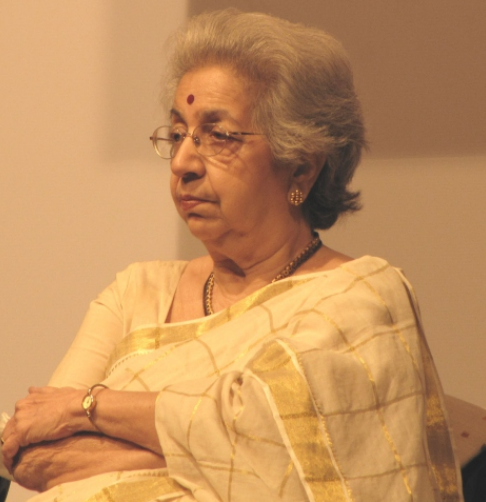
The world of Indian performing arts said farewell to one of its greatest artists with the passing of Vijaya Mehta. An acclaimed actor, director, producer, and mentor, Mehta transformed Marathi theatre and left behind a legacy that continues to inspire artists across generations. She was a resident of Nepean Sea Road. Despite coming from an acting background, Mehta chose stage over commercial cinema. She dedicated herself to developing a new theatrical language that was realistic, experimental, and deeply relatable to everyday citizens. In 1960, she co-founded Rangayan, Mumbai’s first experimental theatrical group. Her group relied on presenting stories rooted in everyday life, which made the theatre more meaningful and relatable for the common man.
Mehta’s art lies in combining Indian traditions with international influences. She has produced and directed Sanskrit plays in Marathi in the classical style as outlined in the Natyashastra. These productions were also a part of an Indo-German collaboration with renowned German director Fritz Bennewitz. They were produced in Weimar and Berlin, presenting Indian theatre to audiences around the world. Her partnership with Bennewitz also led to the Marathi adaptation of Bertolt Brecht’s The Caucasian Chalk Circle, titled Ajab Nyay Vartulacha. Presented in Maharashtrian folk style, the play demonstrated her ability to reimagine global classics through Indian culture. She continued this creative approach with some of Girish Karnad’s plays as well. Mehta also introduced audiences to the works of Vijay Tendulkar, Mahesh Elkunchwar, and international playwrights such as Anton Chekhov. Barrister, Mahasagar, Hamidabaichi Kothi, and Wada Chirebandi are some of her most well-known works. She also directed award- inning films such as Rao Saheb and Pestonjee. As a mentor, Mehta boosted the careers of renowned performers such as Nana Patekar and Anupam Kher. Her talents have won her many recognitions, including National Film Awards and the Padma Shri. She also served as Chairperson of Mumbai’s National Centre for the Performing Arts (NCPA), where she continued to promote theatre and discover new talent. (By Manasi Prabhoo)